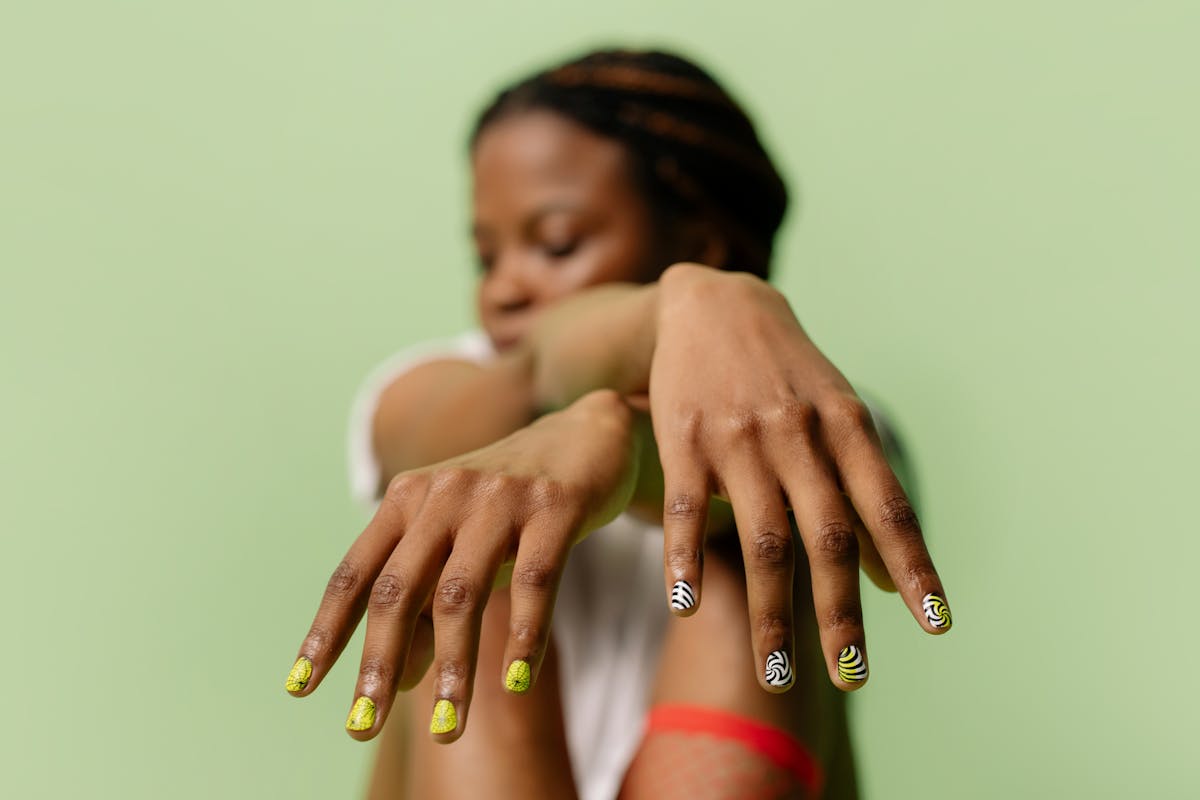
How long a manicure lasts depends on two things: what happens in the salon, and what happens after. We're responsible for the first part — prep, application, and cure. You're responsible for the second. Here's what actually makes a difference.
The first 24 hours matter most
Gel and BIAB both continue to cure and harden after you leave the salon. The full 24 hours after your appointment are when the product is most vulnerable to impressions, lifting, and edge damage.
In that first day, try to:
- Avoid prolonged water exposure — no long baths, no swimming
- Skip the washing-up or wear gloves if you have to
- Don't use your nails as tools (opening cans, peeling stickers)
- Avoid acetone-based nail polish remover on or near the edges
None of this needs to be obsessive — just a bit of care in the first day goes a long way.
Protect the edges
Most manicures start lifting at the free edge or the sides. The edge of the nail takes the most impact in daily life — typing, handling things, cleaning. A few habits help:
- When possible, use the pads of your fingers rather than your nails
- Apply cuticle oil regularly — dry nails and cuticles increase the chance of lifting
- Wear gloves for cleaning and housework, especially with hot water or strong products
Cuticle oil isn't just cosmetic. It keeps the skin and nail flexible, which reduces the mechanical stress on the polish edge. A small bottle kept on a desk and used daily is one of the simplest things you can do.
Moisture and dryness
Counterintuitively, both too much water exposure and too much dryness shorten a manicure. Repeated soaking (lots of hand-washing, dishwashing without gloves) causes the nail to expand and contract, which works the polish loose over time. But very dry nails and cuticles can cause the same problem through a different mechanism.
Keeping hands moisturised helps. Avoid applying hand cream directly on the nail edges if you can — it can act as a barrier for the topcoat — but keeping the skin around the nail healthy makes a real difference.
When to come back
Most gel manicures last two to three weeks before they start to lift or grow out noticeably. BIAB tends to go a bit longer — three to four weeks in many cases, though this varies by individual nail growth rate.
Don't wait until the polish is visibly lifting before rebooking. Lifting creates a gap where moisture and debris can get under the product, which is where problems start. A slight grown-out look is normal; active lifting is the signal to book.
If you notice a single nail has lifted but the others are fine, call us — a quick repair is often possible.
What if it chips early?
A chip within the first week is worth mentioning to the salon. It can mean a prep issue (oils on the nail before application, for example) or a product issue. It can also just be bad luck — a specific impact. Either way, it's worth flagging so we can look at it.
If the same nail chips consistently across multiple appointments, that's more informative. It usually points to something structural about that nail — its shape, flexibility, or how it's used.
The honest part
No manicure lasts forever, and how long yours lasts will vary depending on your lifestyle, nail type, and natural growth rate. We can give you the best application we're capable of; the rest depends on the conditions outside the salon.
If you regularly put your hands through heavy use, gel might chip faster than for someone who types at a desk all day. That's not necessarily a sign anything went wrong — it might just mean BIAB is a better fit for your life.